
A closed circuit
Trace the current path. Where does it return?
Hint
The source needs a closed external circuit.
Answer and working
From A through R1 to B and back to the source. Current is not used up in the resistor; electrical energy becomes heat.
What voltage is measured between A and B?
Hint
The probes are connected across the resistor.
Answer and working
Calculation notes

Probe polarity determines the sign.
Convert 1 kΩ to Ω and calculate I.
Hint
I = U/R; 1 kΩ = 1000 Ω.
Answer and working
Calculation notes

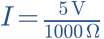

How much power does R1 dissipate?
Hint
P = U × I. Use amperes for current.
Answer and working
Calculation notes


Imagine doubling R1 to 2 kΩ. What happens? Check the model.
Hint
The source keeps U constant.
Answer and working
Calculation notes


At fixed voltage, doubling resistance halves current and power.
Think it through before opening the answer. Always write the formula, substituted values and units.
The mental picture
A pipe restriction reduces flow for the same pressure difference. A resistor similarly limits current. Unlike an inductor or capacitor, an ideal resistor does not store that energy for later: it continually dissipates it.
The principle
The nominal resistance in ohms determines the electrical relationship. The wattage specifies allowable dissipation under defined conditions. Tolerance, temperature coefficient and construction also matter. A tiny SMD resistor and a large cement resistor can have equal resistance but very different power ratings.
Try it yourself
The resistor
Set 10 Ω and 5 V. Dissipation is 2.5 W. Raise the voltage to 10 V: the same resistor now dissipates 10 W.
Model limits: Pure temperature-independent resistance. No thermal simulation or component power approval.
A worked example
In a speaker crossover a resistor can attenuate a sensitive tweeter. That produces heat. The appropriate power rating depends on signal, circuit and mounting, not just the amplifier’s advertised power.
A closer look · equations and assumptions

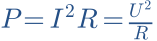

The linear temperature equation is an approximation. α is often specified in ppm/K. Wirewound resistors can have additional inductance; non-inductive winding methods reduce it. Its relevance at audio frequencies depends on the specific component and circuit.
A common pitfall. “10 W” does not mean the resistor stays cool. Datasheets may assume substantial surface temperatures and specific mounting conditions.
Workshop takeaway
Check resistance and wattage together. Keep hot resistors away from damping material and heat-sensitive capacitors.
Sources & transparency
Original illustrations and educational calculations. No measurements of a specific product. Edited 11 October 2026.
Work it out · answers unfold
Write down your prediction first, then your calculation. Open the answer only when you are ready to compare.
02 · Convert 0.004 A to mA and 4.7 kΩ to Ω. Why use consistent units?
Show worked answer
- Milli means one thousandth: 4 mA.
- Kilo means one thousand: 4700 Ω.
- Convert units before substitution.

03 · A 470 Ω resistor has 9 V across it. Find current and dissipation. Is 0.125 W sufficient?
Show worked answer
- I = 9/470 = 19.15 mA.
- P = 81/470 = 0.172 W.
- 0.125 W is insufficient; choose a rating with margin.

04 · 220 Ω and 330 Ω are in series across 11 V. Find total resistance and current.
Show worked answer
- Add series resistors: 550 Ω.
- Both carry the same current.
- 11 V / 550 Ω = 20 mA.

05 · Use the previous series circuit. Find both voltage drops and check their sum.
Show worked answer
- I = 20 mA.
- U1 = 0.02 · 220 = 4.4 V; U2 = 6.6 V.
- 4.4 V + 6.6 V = 11 V.
